



Digital agreements are now the backbone of all businesses, but their legal validity depends on strong regulatory frameworks. In the United States, UETA eSign and the ESIGN Act form the foundation of electronic signature law, ensuring that businesses can confidently sign documents online without relying on paper.
From contracts and HR agreements to financial approvals, organizations increasingly depend on eSignatures and online signatures for speed and efficiency. However, many still ask: How do UETA and ESIGN Act make electronic signatures legally binding?
In this guide, we’ll break down UETA and eSign laws, explain how they work together, and show how businesses can stay compliant while using modern eSignature solutions.
What Is UETA eSign?
The Uniform Electronic Transactions Act (UETA) is a U.S. law that provides legal recognition to electronic signatures (eSign) and electronic records. It ensures that digital transactions cannot be denied legal effect simply because they are electronic.
UETA applies at the state level and has been adopted by most U.S. states. It establishes that an eSignature holds the same legal weight as a handwritten signature when certain conditions are met.
This law enables businesses to:
- Use online signatures for agreements
- Store digital records legally
- Execute contracts without paper documentation
By enabling legally recognized eSign workflows, UETA plays a crucial role in digital transformation across industries.
What Is the ESIGN Act?
The Electronic Signatures in Global and National Commerce Act (ESIGN Act) is a federal law that complements UETA. It ensures that electronic signatures are legally valid across all U.S. states, especially in interstate and international transactions.
While UETA operates at the state level, the ESIGN Act provides nationwide consistency for electronic signature law in the US.
The ESIGN Act ensures that:
- Contracts cannot be denied validity due to electronic format
- Businesses can sign documents online legally
- Consumers must consent to electronic records
- Electronic records must be accessible and retainable
Together, UETA and ESIGN Act create a unified legal framework for eSignature adoption.
UETA and ESIGN Act: How They Work Together
Understanding the relationship between UETA and eSign laws is essential for compliance. Both laws aim to achieve the same goal: making electronic signatures legally enforceable. However, they operate at different levels.
Key Differences and Alignment
- UETA governs electronic transactions at the state level
- ESIGN Act applies federally across all states
- Both laws ensure eSignatures are legally binding
- Both require consent, intent, and record retention
In practice, businesses don’t need to choose between them. If UETA is not adopted in a specific state scenario, the ESIGN Act ensures legal coverage. This dual framework strengthens trust in online signature solutions.
Key Requirements for a Legally Binding eSignature
To comply with electronic signature law, businesses must meet specific criteria defined under UETA and the ESIGN Act.
Intent to Sign
The signer must clearly demonstrate intent to sign the document electronically. This can include clicking “I Agree” or applying a digital signature.
Consent to Do Business Electronically
All parties must agree to use eSignatures instead of handwritten signatures. This is a critical legal requirement.
Association of Signature with Record
The electronic signature must be logically associated with the document being signed.
Record Retention
Documents must be stored securely and remain accessible for future reference.
Authentication and Security
The system must verify signer identity and protect against fraud.
Modern eSignature solutions automatically ensure these requirements are met, making compliance easier.
Benefits of UETA eSign and ESIGN Act for Businesses
The adoption of UETA eSign and ESIGN Act has transformed how organizations manage agreements.
Faster Document Execution
Businesses can sign documents online instantly, reducing turnaround time from days to minutes.
Cost Reduction
Eliminates printing, shipping, and storage costs associated with paper-based processes.
Improved Customer Experience
Users can complete agreements from anywhere using electronic signature free tools or enterprise solutions.
Enhanced Compliance
Built-in audit trails and authentication ensure legal enforceability.
Scalable Digital Workflows
Organizations can automate agreements across departments using integrated systems.
These benefits make eSignature adoption essential for modern enterprises with the help of best esignature tool.
Common Use Cases of eSign and UETA Compliance
The combination of UETA and eSign laws supports a wide range of industries and use cases.
Sales Contracts
Businesses use online signatures to close deals faster and improve revenue cycles.
HR Documentation
Employee onboarding, offer letters, and compliance forms are handled digitally.
Financial Agreements
Banks and fintech companies rely on eSignature for secure transactions.
Healthcare Forms
Patient consent and records are signed electronically with compliance safeguards.
Legal Agreements
Law firms use eSignatures for contracts and documentation.
These use cases demonstrate how electronic signature law in the US enables secure and scalable digital operations.
Are There Documents That Cannot Be Signed?
While eSignatures are widely accepted, some documents may still require handwritten signatures depending on jurisdiction.
These may include:
- Wills and testamentary documents
- Certain real estate transactions
- Court orders and legal notices
Businesses should verify specific legal requirements before using online signatures for sensitive documents.
How to Stay Compliant with UETA and ESIGN Act
To ensure compliance with UETA eSign and ESIGN Act, organizations should follow best practices.
Use a Trusted eSignature Solution
Choose a secure platform that meets legal standards and provides audit trails.
Implement Authentication Methods
Use multi-factor authentication, OTPs, or identity verification.
Maintain Audit Trails
Track all actions related to document signing.
Secure Document Storage
Store signed documents in encrypted systems.
Include Consent Clauses
Clearly state that users agree to use electronic signatures.
Following these practices ensures your electronic signature workflows remain legally enforceable.
Future of Electronic Signature Law
As digital transformation accelerates, electronic signature law will continue to evolve. AI-driven verification, blockchain-based signatures, and advanced identity authentication will further strengthen eSignature security and compliance.
Businesses that adopt compliant eSign solutions today will be better positioned for future regulatory and technological advancements.
Conclusion
UETA eSign and the ESIGN Act form the backbone of electronic signature law in the US, making it possible for businesses to operate efficiently in a digital-first world.
By ensuring legal validity, security, and compliance, these laws allow organizations to confidently use eSignatures, online signatures, and digital agreements across industries.
As more businesses shift to digital workflows, understanding and implementing UETA and eSign compliance is essential. With the right approach and secure eSignature solutions, organizations can streamline operations while ensuring every document remains legally binding and enforceable.
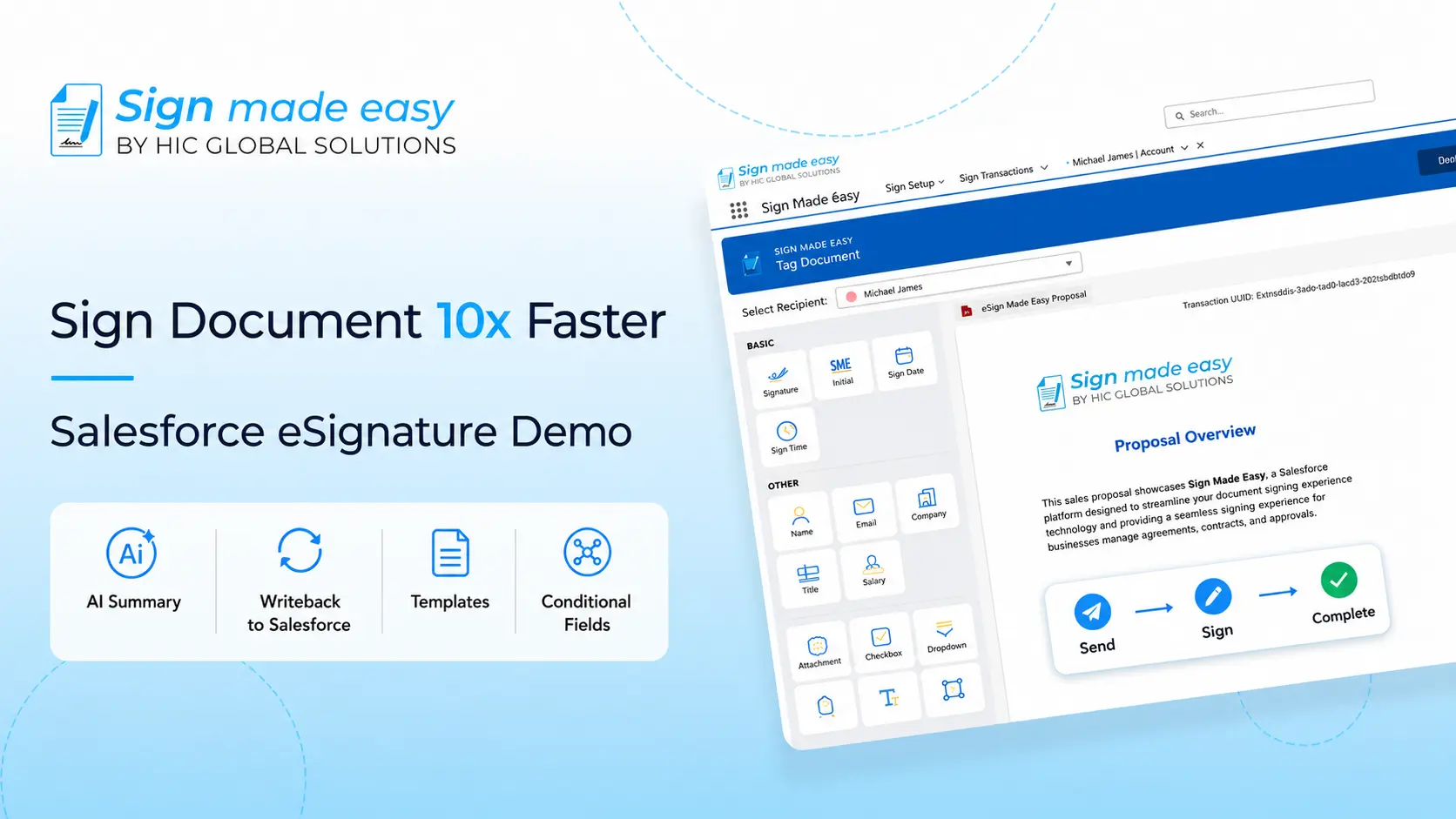
If you’re looking for a reliable Salesforce eSignature solution, explore Sign Made Easy, which is a fast, secure way to send, sign, and manage all your documents in just minutes, without ever leaving Salesforce.
View Signature disclosure requirements for electronic signatures.