


Is Your Healthcare eSignature Solution HIPAA Compliant? If Not, Here’s What’s at Risk

Share article via
Posted on July 30, 2026
By Team Sign Made Easy | 5 Mins Read
HIPAA Compliant eSignature
TL;DR
In healthcare, ensuring the security of patient information is paramount, making it crucial to select a HIPAA-compliant eSignature solution. While digital signatures enhance efficiency, non-compliant platforms can lead to significant risks, including data breaches, identity theft, costly HIPAA violations, loss of patient trust, and operational slowdowns. A robust eSignature platform should include features like strong document encryption, secure audit trails, user authentication, and compliance reporting. Sign Made Easy offers a comprehensive solution designed for healthcare, ensuring compliance while simplifying document management. Prioritizing security in eSignature processes safeguards patient information and maintains the trust essential for healthcare providers.

Healthcare is probably one of those industries where “almost secure” just isn’t enough. Patients trust hospitals, clinics, and healthcare providers with some of the most personal information they’ll ever share. Therefore, every document they sign deserves the same level of protection.

The thing is, many organizations move to digital signing because it saves time. Which is great. But somewhere along the way, people sometimes forget to ask one very important question: Is this actually built for healthcare compliance?

If the answer is no, the risk isn’t only about breaking a rule. It could mean exposing patient information, slowing down operations, or creating problems that no team wants to deal with later. That is exactly why choosing a HIPAA Compliant eSignature solution matters much more than people often realize.

What Can Go Wrong When Your eSignature Solution Isn’t HIPAA Compliant?

Digital signatures definitely make work easier. But if the platform isn’t designed with healthcare regulations in mind, that convenience can disappear pretty quickly.

Let’s look at some of the biggest risks.

Patient Data Breaches
Every signed healthcare document carries sensitive information, whether it’s medical history, insurance details, test reports, or personal records. If your eSignature platform isn’t HIPAA compliant, that information becomes much easier to expose. One security incident can put thousands of patient records at risk, and honestly, once private data is out, there’s no way to undo it.
Identity Theft and Medical Fraud
Healthcare data is one of the biggest targets for cybercriminals because it contains so much valuable information. If someone gains access to patient records, they can misuse identities, submit fake insurance claims, or commit medical fraud. It starts with one weak point in the system, and unfortunately, the impact can stay around for years.
Costly HIPAA Violations
Nobody wants to deal with audits or compliance notices. But when your eSignature solution doesn’t meet HIPAA requirements, that’s exactly what can happen. The result could be regulatory penalties, legal trouble, and a lot of unexpected work for your team. Therefore, choosing the right platform from the beginning usually saves much bigger problems later.
Patients Stop Trusting You
People share their health information because they believe it’s safe with you. If that trust is broken, even once, rebuilding it isn’t easy. Some patients may hesitate to share important information, while others might even choose another provider. Additionally, your reputation can take a hit long after the incident itself is over.
Daily Work Starts Slowing Down
An insecure signing process creates uncertainty. Teams begin double-checking documents, adding manual approvals, or finding workarounds because they don’t fully trust the system anymore. Little by little, those extra steps pile up, and what was supposed to make work faster actually starts doing the opposite.

Choosing the right Salesforce eSignature solution is essential for healthcare organizations. Without HIPAA compliance, digital document workflows can increase security risks, compromise patient data, and create costly compliance challenges.

So, What Should a Healthcare eSignature Solution Actually Include?

This is probably the better question.

Instead of only asking whether a platform can collect signatures, healthcare organizations should also ask whether it can protect every document throughout the entire process.

A good healthcare eSignature platform should include:

  • HIPAA compliance
  • Strong document encryption
  • Secure audit trails
  • User authentication
  • Access permissions
  • Document tracking
  • Compliance reporting
  • Scalable workflows
  • Secure cloud storage

These features may stay in the background most of the time. Still, they’re usually the reason everything keeps running smoothly when document volume starts increasing.

Why Leading Healthcare Enterprises Trusts Sign Made Easy

Finding the right platform shouldn’t feel complicated. It should simply give your team confidence that every document is handled securely from beginning to end.

Sign Made Easy was built with exactly that in mind.

It helps organizations send, sign, manage, and track documents while supporting important compliance requirements that healthcare providers cannot afford to ignore. The platform also keeps the signing experience simple, because security shouldn’t make everyday work harder.

With Sign Made Easy, you get:

  • HIPAA compliance
  • SOC 2 Type II compliance
  • GDPR compliance
  • 256-bit AES encryption
  • Complete audit trails
  • Secure access controls
  • Digital document tracking
  • Faster approval workflows
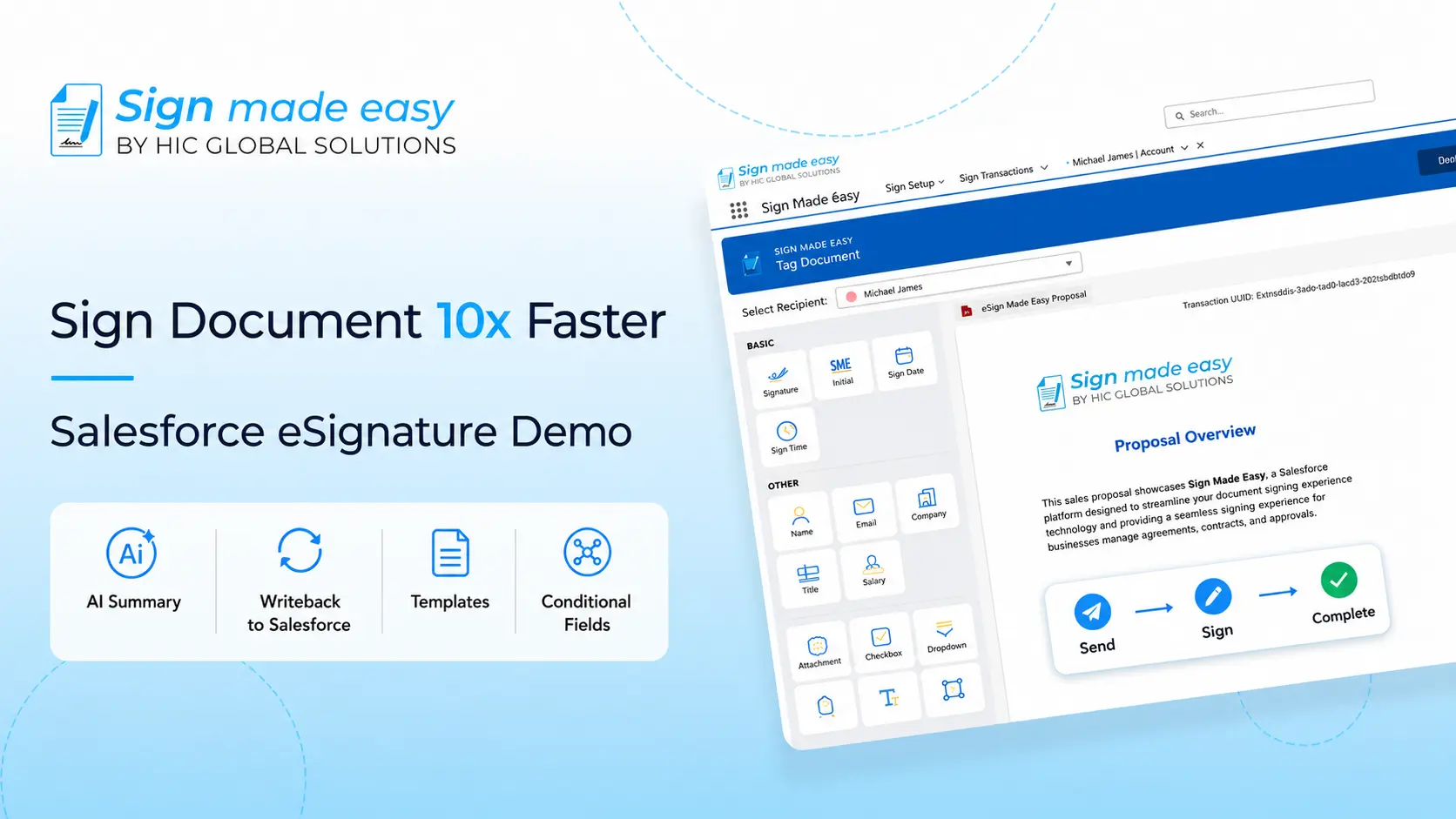
  • Easy Salesforce integration

Whether you’re sending patient consent forms, treatment agreements, medical authorizations, insurance paperwork, or internal healthcare documents, Sign Made Easy helps healthcare teams manage everything through one secure platform.

It also supports healthcare eSignature workflows that reduce manual effort while helping organizations stay compliant as they continue growing.

Wrapping Up

Technology changes quickly. Healthcare regulations don’t become less important because documents become digital.

Choosing a HIPAA Compliant eSignature platform isn’t simply about checking a compliance box somewhere during procurement. It’s about protecting patient information, supporting your staff, and making sure every signature carries the trust that patients expect.

The right healthcare eSignature solution should help documents move faster without making security feel like an afterthought.

If your organization is looking for secure, compliant, and easy-to-manage eSignature Solutions for Healthcare, choosing a platform that supports HIPAA Electronic Signature requirements from day one is one decision you’ll probably be glad you made later.

Frequently Asked Questions

A HIPAA compliant eSignature solution protects patient data with encryption, audit trails, and secure access controls. Sign Made Easy offers these features to help healthcare organizations manage documents securely.
Healthcare providers need HIPAA compliant eSignatures to protect sensitive patient information and support regulatory compliance. Sign Made Easy simplifies secure digital signing for healthcare teams.
A healthcare eSignature solution should include HIPAA compliance, encryption, audit trails, user authentication, and document tracking. Sign Made Easy provides these security features in one platform.
Yes. Healthcare organizations can securely sign consent forms, treatment agreements, insurance documents, and medical authorizations using Sign Made Easy.
Sign Made Easy protects healthcare documents with 256-bit AES encryption, secure audit trails, access controls, and compliance-focused workflows.
A solution that supports HIPAA compliance, strong security, and workflow automation is ideal. Sign Made Easy helps healthcare organizations securely manage digital signatures while staying compliant.